

We arrive for breakfast, waltzing along the buffet bar and greet our fellow tour members while filling our plates with interesting delicacies. There are English breakfast fixings, but I prefer the Turkish items. When looking at them side by side, the English breakfast is heavy, and the Turkish breakfast is light. Olives, cucumber, tomatoes, yogurt, assortments of bread and jams. Reaching the end of the buffet table, we discover the coffee machine is out of order. Donna needs her caffeine in the morning. I’m not grumpy, it’s that I really enjoy that first swig. I’ve discovered over the years I have a ‘resting bitch face’ and I can tell you that until I’ve had my coffee it takes major effort to change it. Looks like it will be tea today.
Basilica Cisterna
As a group, we take public transit (tram) to the market area, however, not the Grand Bazaar. That was not included in our tour. Kivanç directs us to a main square where we can see the Hagia Sophia Grand Mosque, which is on our agenda, however most of the group wants to go to the Basilica Cisterna and so Kivanç kindly pivots. How wonderful to be able to do that. For 30 Euro we are allowed entrance. To be totally honest, at the start, I wasn’t really interested in going in but I am happy to say that I did. This water feature built in the 6th century by the Romans is an engineering feat. The ceiling is supported by 336 marble columns in 28 rows and has the face of Medusa on some. The architecture of the columns are in Corinithian, Ionic or Dorian style. I will have to watch the James Bond movie “From Russia With Love” again. Sean Connery apparently rows a boat through the cistern.
Accessibility?
Be aware there are 50+ steps leading down into the cistern. From my research, there is one lift that will handle one wheelchair. If there are two chairs, the process can take up to 30 minutes. You can also bring a child’s stroller.
There are approximately 150 cisternae beneath the City of Istanbul, but this one is the largest in the world. Basilica Cisterna was the source of water that fed the Grand Palace of Constantinople.


There is a huge line up for the public, so we are lucky to get in quickly. Descending the stairs, drops of water land on my head due to the high humidity. The water has been drained low enough for walkways to be constructed to allow further access by tourists. To highlight the beauty of this site, lights have been installed to shine on the marvelous columns and recently, artistic installations have been placed around where their shadows reflect off the walls. It is a quick, beautiful, must see. My favourite was the Medusa reflection on the wall.
Blue Mosque (Sultanahmet Mosque)
Afterwards we head back to the main square where Kivanç points to where a good cup of coffee can be located. Hallelujah!!! We have a choice to either visit the Hagia Sofia or the Blue Mosque on our own if we are back at the meeting point by 11:45 am. Shannon and I both want to see the Blue Mosque (Sultan Ahmed Mosque) and it is in front of us and free! How could you not? The only issue appears to be the line-up, but we decide to give it a try. The line moved very quickly. We brought our head scarves with us but if you didn’t have one, a beautiful peacock blue one is handed out. Men must have their knees covered, so those in shorts are given disposal long pants to slip on. Once you hit the carpet, you must remove your footwear.


Tip: I suggest carrying your footwear, so you don’t have to circle back to the entrance to collect them.
Once inside, you are presented with domes of mosaic tile that are stunningly beautiful. It is an active mosque with the men praying on one side and the women praying on the other. People are praying while throngs of people filter by. This adds to the mystery and holiness but also feels intrusive. That is how I felt. I notice the women praying section is a significantly smaller area than the mens. Lights hang in a circular manner from what I guess used to be oil lanterns. The columns are spectacular.
This mosque was built between 1609-1616 and is directly across from the Sofia Hagia Mosque. It was built to show a sign of strength. It has over 20,000 handmade ceramic tiles. There are six minarets on the outside which is unusual for a mosque. Apparently when the sultan was discussing the design with the architect he asked for gold minarets, but the architect misheard six. (Altin vs. Alti). The only other mosque that has six minarets is in Mecca. The centre dome is magnificent and is surrounded by four smaller domes.
On our way back to the meeting place we pass the Hippodrome (giant obelisk). Back in the day when Istanbul was called Constantinople, the hippodrome was the sporting and social centre where horse and chariot races were once held. The word hippodrome derives from ‘hippos’ meaning horse and ‘dromos’ meaning path or way.

We grab a fabulous cappuccino and a magnolia. Magnolia is a Turkish custard dessert with a crushed biscuit base and decorated with fruit. In this case it was strawberries. I would liken it to a trifle. Delicious and a huge portion!

My pedometer recorded 13,000 steps and that was just the morning. Once everyone had their snack and used the facilities, it was time to head to the Spice Bazaar. We weave down the main street passing different shops while Kivanç points out the foods we see. Pretzels are a big street snack here. Full lambs are roasted on spits in shop windows, women are sitting lower than street level rolling out dough for a lovely delicacy that we will try soon, called gözleme, a Turkish flatbread stuffed with your choice of beef, lamb, spinach and cheese, or eggplant. Yummy!
For dessert, baklava and other pistachio and honey dipped delights are tiered in windows enticing you as you walk by.


Spice Bazaar
About 30 minutes later we arrive at the Spice Bazaar. The domed ceiling seems to go on forever. We enter and are told to go inside and sit inside this little shop. I pull out a stool and rest my legs. The proprietor gives us a talk on the local treat, Turkish delight. He explains how his products are organic while his assistants present us with price sheets on different varieties. This is a total tourist trap and a waste of time in my opinion. The proprietor is a colourful character but really, it’s a sales pitch. Shannon and I shake our heads and get out of there fast! We can find similar products elsewhere. As we leave, a new group is being shuttled in. They must do this from dusk to dawn. It would have been nice to wander the bazaar, but Kivanç has us on a different schedule today. Perhaps we will have time to explore further when we return to Istanbul at the end of the trip.


Once outside, Kivanç kindly buys the group some roasted chestnuts from a street vendor. I love how the chestnuts are displayed in pyramids along side the roasted corn on the cob. We all share a bag, and after a bite or two, we politely and discreetly discard it due to the blandness. A salt shaker hasn’t passed over these. Pretzels, corn, and roasted potatoes are big street vendor items.
We’re Not in Europe Anymore!
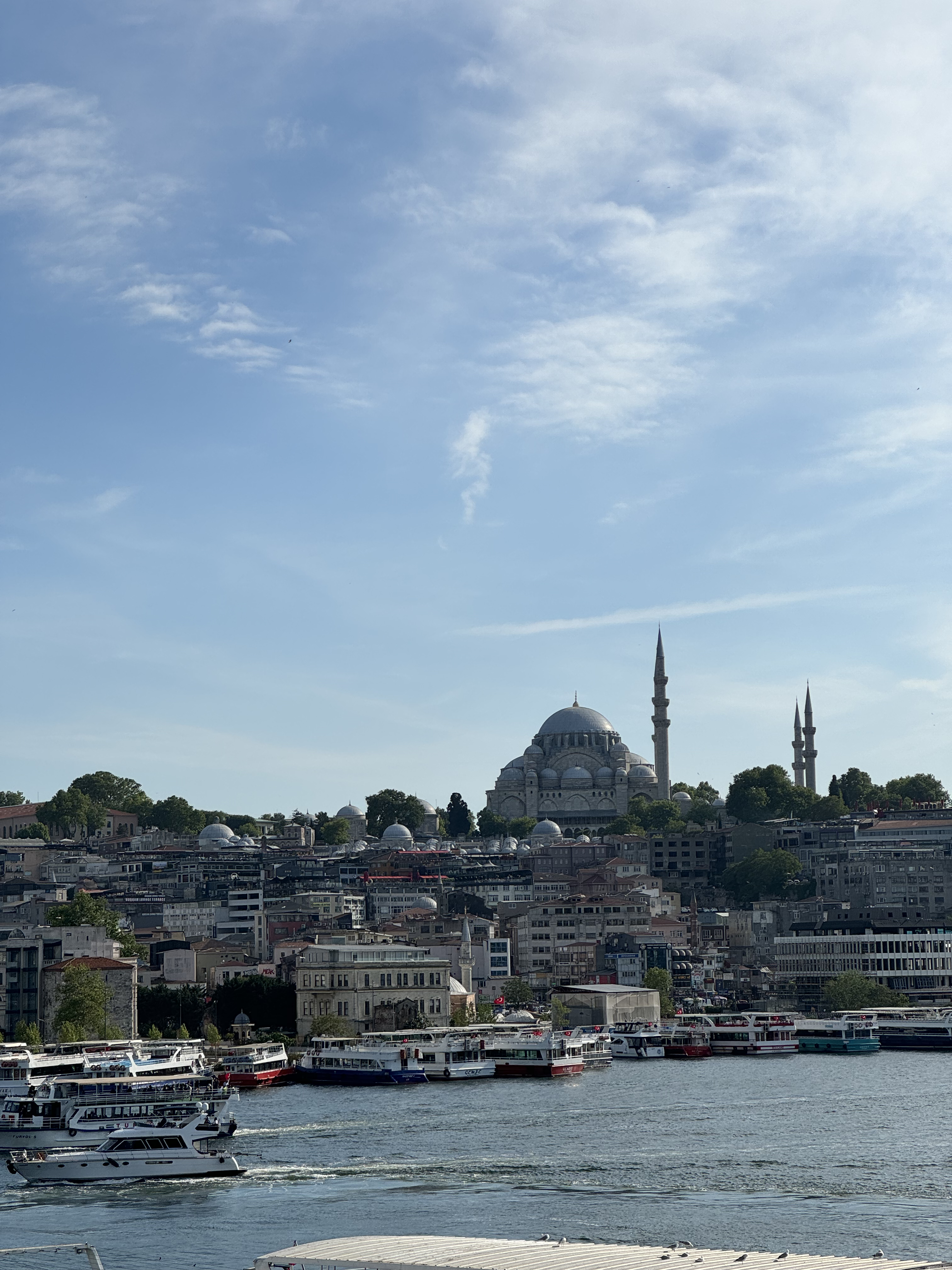
We hop back on the streetcar and head to the Bosphorus Strait harbour where we take a ferry to the Asian side of Istanbul. Istanbul is split between the European and Asian continents. The Bosphorus Strait, a natural waterway, connects the Sea of Marmara to the Black Sea. It is also a major trade route. The European side hosts most of the historic monuments and museums, while the Asian side has more parks and restaurants. We are heading to the Asian side to do a food tour and stop for lunch.


While on the ferry, the seagulls, the largest I have ever seen, follow the ferry waiting for the locals to share their bread with them. No word of a lie, the seagulls are huge!
A Visit to the Continent of Asia
Arriving on the continent of Asia 30 minutes later, we wind our way through the Kadiköy Market filled with olive, fruit, fresh flowers, fruits, vegetables, hanging meats and cheese. We have walked a crazy number of steps to this point, and I am famished.
ÇIYA Sofrasi *****
The manager at ÇIYA Sofrasi is waiting for us and pointed us to a street-side table at ÇIYA Sofrasi. This restaurant is featured in the show Chef’s Table (Season 5). I have linked the Netflix episode here.
Chef Musa Dağdeviren sadly discovered that the knowledge for creating regional Turkish dishes was disappearing, including his home town. He wanted to create a book of regional recipes and so travelled around Turkey to gather those recipes. He returned to Istanbul where he had a restaurant called ÇIYA Kebab. A vacancy opened up across the street, and his wife, Zeynep, suggested that instead of a book, he replicate those recipes and share with the people. This is how ÇIYA Sofrasi came to be.
First on the menu is Kagit Kebap. It is like a Turkish pizza made with minced meat, parsley, pepper, garlic, onion, black pepper, red pepper flakes, dolmas (stuffed grape leaves), yogurt and mint and something interesting and sweet which we find out later is quince. It is nice to rest, eat, and get to know our tour group members better while watching the action around us. Locals are coming and going, people are yelling, eating, drinking and smoking. Tables and wood-slatted chairs are lining either side of the street under awnings. The flavours are quite interesting and delicious. We are sitting on the Asian continent enjoying tasty treats and then an hour later we are ferrying back to the European side. Very cool.
If I was to return to Istanbul
Not everything is included in this trip but believe me it is a full agenda. I will consider returning one day to Istanbul to visit the Grand Bazaar, Sofia Hagia, a river cruise up the Bosphorus and experience some of the nightlife. What we have been introduced to seems a little white-washed but there seems to be a fun vibe to this city that we only got to see at a distance. That is the difference between solo or independent travel vs. a group tour. You can’t explore as much with a group, but you also can’t get into too much trouble.
Ending the Day on a Delicious Note
Once back on the European side, we head back to the hotel. I need to rest while Shannon and Jocelyn, one of our American tour group members and I suspect the youngest of the group, head up the hill to the shopping district. They are going to text me when they are heading back to the hotel so I can join them for dinner. Changing for dinner, I miss the text from Shannon, but they didn’t have to wait too long. We walk up the street for one block and stop in front of a restaurant, check out the menu and head inside. Dinner is on our own tonight.
Salon Galata ****
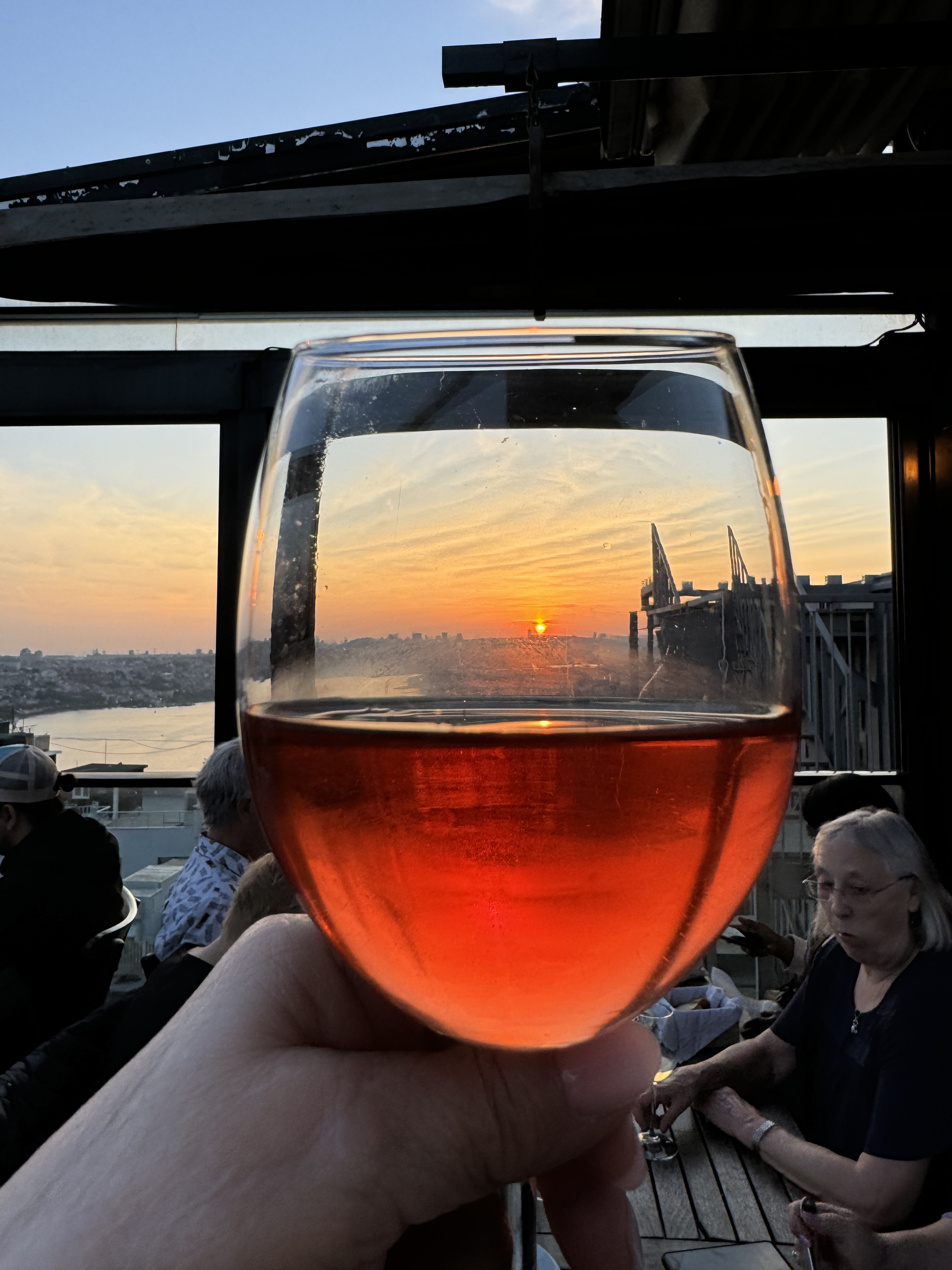
We choose Salon Galata. It is in a restored building with brick walls, wooden carved wainscotting and huge mirrors and lovely lighting to create a warm ambiance. While being seated, we spot the rest of our tour group at the back of the restaurant. We keep to ourselves as they look like they are almost finished. A bottle of blush and a glance at the menu and I know exactly what I want. Crispy cauliflower as an appetizer and lamb shank for a total of 1170 Turkish Lira (49 $CDN). Street food is obviously a lot less expensive, but we paid for the atmosphere, and location. Still by our Canadian standards, it is not expensive. The cauliflower is impressive and mouth-watering. It is a winner. The lamb shank is done to perfection, however presented plainly and without panache. The Turkish wine was a nice complement to the meal. The service is attentive and pleasant. I would return if in the area. I checked, but they don’t seem to have a website, but photos and menus can be found on Facebook and Instagram.


It has been a long, tiring, delicious day! Our group is beginning to meld nicely. We are seeing interesting places and tasting wonderful food. Falling into bed, I fall to sleep with no issue.
Exploring Istanbul: Takeaways
I should have done my research as Istanbul is sprawling and busy. It is also known as the City on the Seven Hills, modelled after Rome. Be prepared for steep inclines, descents and cobblestones. I would bring walking sticks if you have mobility issues. Stairs are everywhere, even the sidewalks are like stairs. You really need to concentrate. Handrails are few and far between.
The infrastructure is crumbling where we stayed with narrow streets and lots of construction. It is loud, beautiful and intriguing at the same time. Smoking is part of the culture and people seem to yell a lot. I think it is to be heard over honking cars and buses. Public transportation is recommended and it is easy to get around. In the Karaköy neighbourhood, where we stayed, it was close enough to the water and the nightlife.
Istanbul is more moderate and you will find that there is a real mix between the conservatively-dressed and the younger, cosmopolitan women/girls. Men do look at you because you stand out as a tourist, but not once did I feel unsafe. We were advised to not travel at night alone, so recommend heeding that advice. Alcoholic drinks are served in most of the current bars/restaurants.
I used my Wise card for most transactions and most vendors, including the random street vendors. Of course, cash is king and Turkish Lira is the currency of choice, however, at the airport and at major attractions you might have to pay in euros.
Shannon and I ate street food which was delicious and priced well below what you would get in a restaurant. Plunk down on a chair, mingle with the locals, save yourself some money. Just be prepared, that the guy cooking your food might be smoking a cigarette.
The Istanbul airport is about an hour away and that can take longer as traffic is crazy at rush hour. Make sure you leave yourself lots of time.
Dear Donna,
<
div> I just loved reading this. I always write travel journals and
It is such a wonderful way to relive the moments. Thanks for following along. D xox